Best Automatic Pet Feeders in Australia: 2026 Buying Guide
An automatic pet feeder can make daily mealtimes easier, more consistent and less dependent on your work or family schedule. However, choosing the best automatic pet feeder in Australia is not simply a matter of selecting the largest food container or the model with the most features.
The right feeder depends on your pet’s size, normal food allowance, eating habits, kibble size and the number of meals required each day. You should also consider whether you need Wi-Fi app control, a built-in camera, two feeding bowls, battery backup or a straightforward programmable feeder without an app.
A compact automatic cat feeder may be ideal for one indoor cat, while a larger dog or multi-pet household may benefit from a 6L, 7L or 9L model. Owners who work long hours may value remote feeding and camera monitoring, while others may prefer a simpler feeder that stores its schedule directly on the machine.
This guide compares the main types of automatic pet feeders available from Smart Pet Co and helps Australian pet owners choose the most suitable option for their cat, dog or multi-pet household.
Important: Recommendations in this guide are based on published product specifications and intended use. They are not based on independent laboratory testing. Always check the individual product page before ordering and follow your veterinarian’s advice regarding your pet’s daily food allowance.
Quick Comparison: Which Automatic Pet Feeder Is Best for You?
Here is the fastest way to narrow down your options:
-
Best compact feeder for one cat: 2L Automatic Cat Feeder
-
Best smart feeder for a cat or small dog: 3.5L Automatic Wi-Fi Cat Feeder
-
Best automatic feeder for two compatible pets: 5.5L Dual-Bowl Wi-Fi Feeder
-
Best feeder without Wi-Fi: 6L Programmable Automatic Pet Feeder
-
Best feeder for remote monitoring: 6L or 7L Automatic Feeder with Camera
-
Best large-capacity option: 9L Automatic Wi-Fi Pet Feeder
-
Best choice for flexible scheduling: A model offering 10 or more daily meals
-
Best choice for simple operation: An LCD programmable model without app control
Browse the complete range of automatic pet feeders in Australia to compare available sizes, bowls, cameras and feeding features.
What Is an Automatic Pet Feeder?
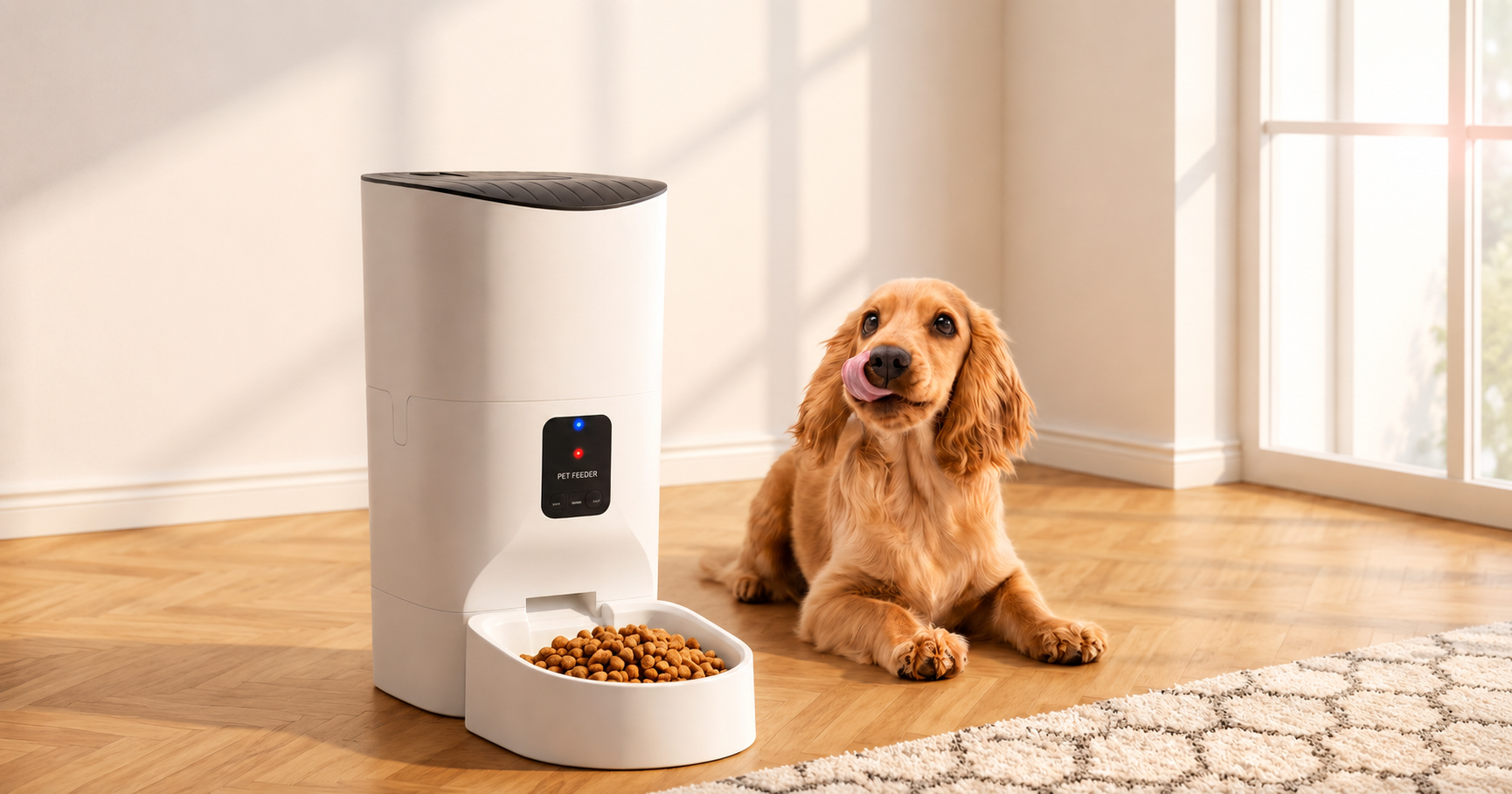
An automatic pet feeder stores dry food inside a container and dispenses a selected amount into a bowl at programmed times.
Basic models are controlled using buttons and an LCD screen. Smart automatic pet feeders connect to a mobile app, usually through a 2.4GHz Wi-Fi network, allowing owners to adjust feeding schedules or dispense food remotely.
Depending on the model, features may include:
An automatic feeder can support a reliable routine, but it does not replace responsible pet care. Cats and dogs still need fresh water, exercise, attention, toilet care, health monitoring and suitable supervision.
The Best Automatic Pet Feeders for Different Households
There is no single feeder that is best for every cat or dog. The following recommendations match different feeder types with the households they are most likely to suit.
Best Compact Automatic Cat Feeder: 2L Model
The 2L Automatic Cat Feeder is designed for owners who want a compact feeder with straightforward scheduling and flexible placement.
It offers up to six meals per day and can operate using batteries, making it useful in areas where keeping a power cable connected may be inconvenient.
A 2L automatic feeder may suit:
-
One cat
-
A small dog with a low daily food allowance
-
Apartments and smaller homes
-
Owners who prefer frequent refilling
-
Multi-cat homes using one feeder for each cat
-
Pets requiring several small meals each day
-
Areas without a convenient power outlet
Its smaller capacity means it will generally require more frequent refilling than a 5L, 6L or 9L feeder. However, regular refilling can also make it easier to monitor food freshness and remaining supply.
Choose a compact model when space, simple scheduling and flexible placement matter more than Wi-Fi, camera monitoring or maximum food storage.
Best Wi-Fi Feeder for Cats and Small Dogs: 3.5L Model
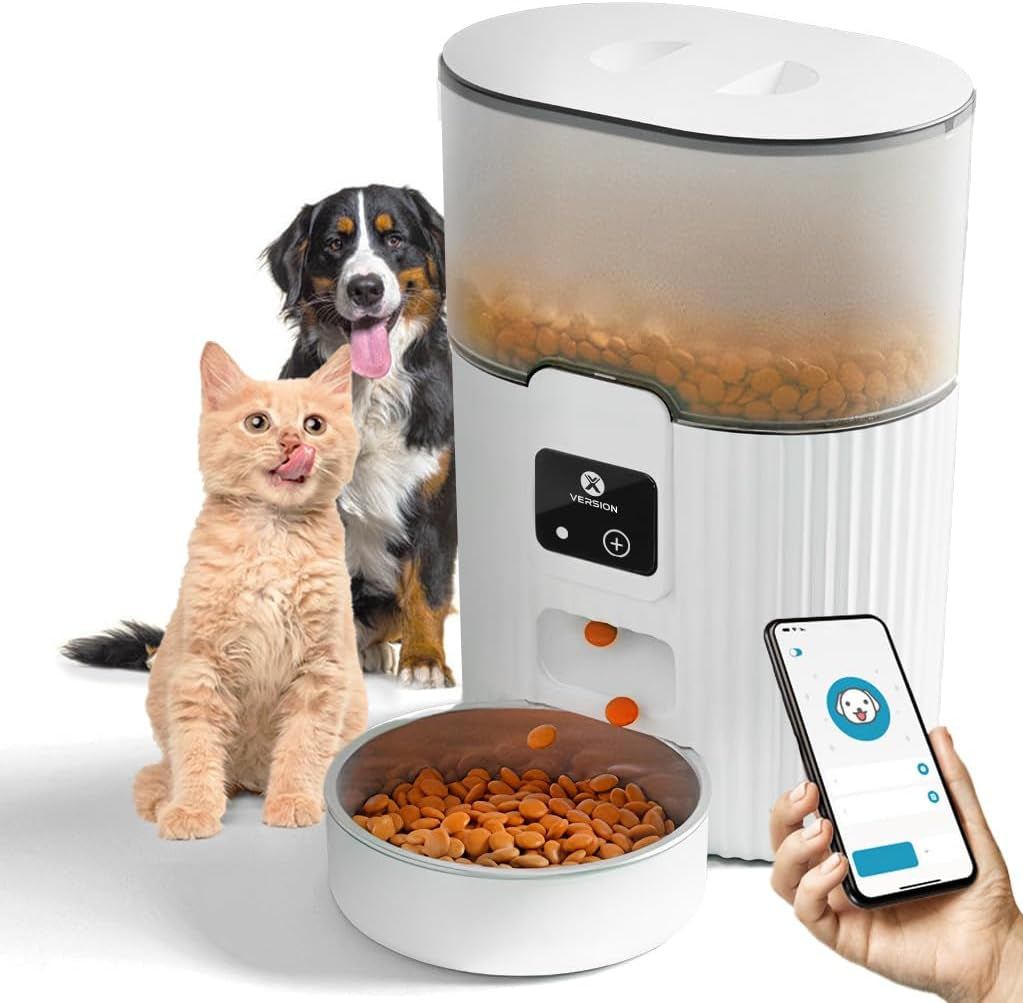
The 3.5L Automatic Wi-Fi Cat Feeder combines a moderate food capacity with mobile app control.
It supports up to 10 meals per day, adjustable portion settings and remote feeding through the Smart Life app over a compatible 2.4GHz Wi-Fi connection. Its transparent container also lets owners check the remaining food level at a glance.
This feeder may suit:
-
One cat
-
A small dog
-
Owners wanting app-based schedules
-
Pets eating several smaller meals
-
Households needing remote manual feeding
-
Owners wanting a stainless-steel bowl
-
First-time buyers looking for a compact smart feeder
The 3.5L capacity provides more storage than a small 2L model without taking up as much room as a large dog feeder.
Before ordering any Wi-Fi pet feeder, confirm that your home network supports the required frequency. Many smart pet products require 2.4GHz Wi-Fi and may not connect directly to a 5GHz-only network.
Best Automatic Pet Feeder for Two Pets: 5.5L Dual-Bowl Model
The 5.5L Dual-Bowl Automatic Pet Feeder divides food between two stainless-steel bowls and supports Wi-Fi app control.
With up to 15 meals per day, it offers greater scheduling flexibility than many standard models.
A dual-bowl feeder may suit:
-
Two cats eating the same dry food
-
Two small dogs with similar meal requirements
-
Compatible pets comfortable eating together
-
Owners wanting one food container for two bowls
-
Households requiring multiple small meals
-
Owners who want to control feeding through an app
A two-bowl design does not guarantee that both pets will receive equal amounts. Food distribution can vary, and one pet may finish eating before moving towards the second bowl.
Monitor the first several meals carefully. Separate feeders are generally more suitable when:
-
Pets eat different foods
-
One pet requires medication
-
One animal guards food
-
One pet eats much faster
-
Daily food allowances differ significantly
-
Pets are uncomfortable eating beside each other
For compatible cats or small dogs, a dual-bowl feeder can reduce clutter and simplify shared feeding schedules.
Best Automatic Feeder Without Wi-Fi: 6L Programmable Model
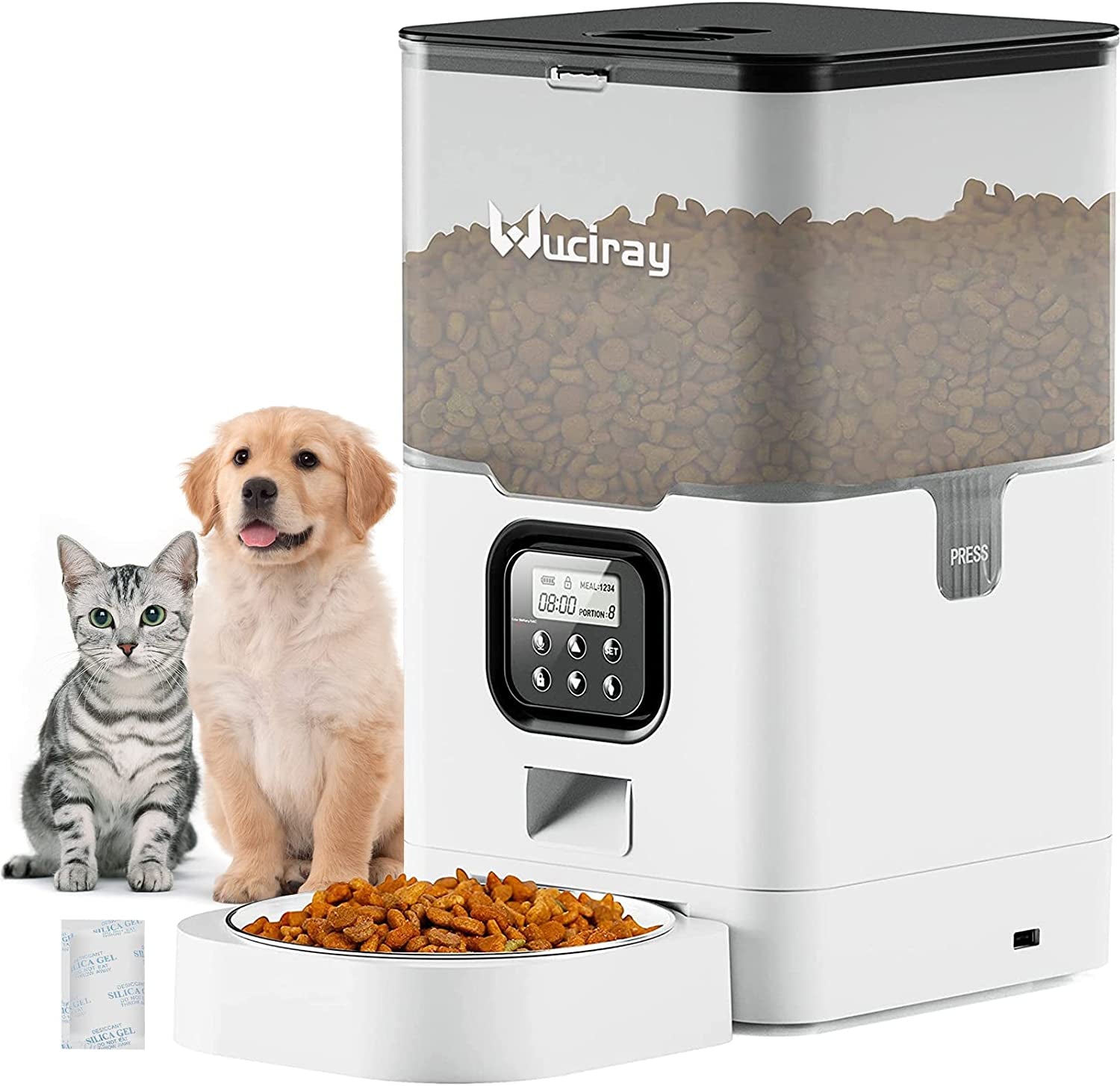
The 6L Automatic Pet Feeder is a practical option for owners who want scheduled meals without relying on an app or internet connection.
It can be programmed directly through its LCD controls and offers:
-
One to four meals per day
-
Adjustable portion settings
-
10-second voice recording
-
A removable 304 stainless-steel bowl
-
A transparent food tank
-
A locked top cover
-
A desiccant compartment
-
Schedule memory
-
Power-adaptor or battery operation
This type of feeder may suit:
-
Cats and dogs needing a basic daily routine
-
Owners who do not want app control
-
Homes with unreliable Wi-Fi
-
People who prefer physical controls
-
Food-motivated pets requiring a locked lid
-
Owners wanting a larger container without a camera
The main trade-off is that it offers fewer daily meal slots than some Wi-Fi models. It is therefore better suited to pets eating one to four scheduled meals rather than very frequent small portions.
Best Automatic Pet Feeder With Camera: 7L HD Camera Model
The 7L Automatic Pet Feeder with Camera combines a larger food container with remote feeding and visual monitoring.
Features include a 3MP HD camera, night vision, Wi-Fi app control, built-in speakers and multiple scheduled meals.
A camera feeder may suit owners who want to:
-
Check whether their pet approaches the bowl
-
View the feeding area while away
-
Speak to their pet remotely
-
Monitor the area at night
-
Dispense an additional meal from a smartphone
-
Reduce how often the food container needs refilling
-
Use one feeder for a cat, dog or compatible multi-pet home
A camera does not confirm every aspect of a pet’s wellbeing. It may show the feeding area, but it cannot replace an in-person check when you are away for an extended period.
Choose a camera model when remote visibility is genuinely useful. When you only need timed meals, a simpler programmable feeder may provide better value.
Best Detailed Camera Feeder: 6L 1080p Model
The 6L Automatic Pet Feeder with 1080p Camera offers camera monitoring alongside more detailed feeding controls.
Depending on the selected model, features may include:
-
1080p HD video
-
Night vision
-
Two-way audio
-
Adjustable camera viewing angle
-
Multiple daily feeding schedules
-
Feeding records
-
Low-food notifications
-
Anti-blockage detection
-
A secure twist-lock lid
-
Remote feeding through an app
This type of smart pet feeder may suit owners who prioritise detailed app features and camera quality over maximum container capacity.
Camera feeders should be positioned where the bowl and surrounding area remain visible. Test the view during both daylight and low-light conditions before relying on it.
Best Large-Capacity Automatic Dog Feeder: 9L Wi-Fi Model
The 9L Automatic Wi-Fi Pet Feeder provides greater dry-food storage for larger dogs, pets eating higher daily quantities or households wanting less frequent refilling.
Features may include:
A 9L automatic dog feeder may suit:
-
Medium or larger dogs
-
Multi-pet households
-
Pets eating larger quantities of dry food
-
Owners wanting fewer refills
-
Households sharing feeder control
-
Owners who want app scheduling without a camera
Do not choose capacity based on pet size alone. Calculate how much dry food your dog eats each day and compare that amount with the feeder’s usable storage.
Large feeders must still be checked regularly. Inspect the remaining food, dispensing outlet, bowl, power supply and app status as part of your normal routine.
What Size Automatic Pet Feeder Do You Need?
Automatic feeder capacity is commonly measured in litres, but litres do not translate into an exact number of meals or days.
Kibble varies in size, weight, shape and density. A container may hold more of a small, dense kibble than a large or unusually shaped variety.
Use the following guide as a starting point.
2L Feeders
Generally best for:
3L to 4L Feeders
Generally best for:
-
One cat
-
A small dog
-
Everyday scheduled feeding
-
Owners wanting a balance of capacity and compact size
-
Smart app control without a very large machine
5L to 6L Feeders
Generally best for:
-
Cats
-
Small-to-medium dogs
-
Two compatible pets using a dual-bowl model
-
Owners wanting fewer refills
-
Camera and non-camera options
-
More flexible meal scheduling
7L to 9L Feeders
Generally best for:
-
Medium or larger dogs
-
Multi-pet homes
-
Higher daily food quantities
-
Owners wanting greater storage
-
Camera monitoring or app control
-
Longer intervals between refills
To estimate how often a feeder requires refilling:
-
Measure your pet’s total daily dry food allowance.
-
Determine how much of that food fits inside the feeder.
-
Divide the usable food quantity by the daily allowance.
-
Leave a safety margin rather than waiting until the container is completely empty.
The Most Important Features to Compare
Meal Scheduling
Check how many meals the feeder can dispense each day.
A cat eating several small meals may benefit from a model offering 10, 12 or 15 daily schedules. A dog eating twice daily may not need that level of flexibility.
Choose based on the routine you will actually use rather than selecting the highest number automatically.
Portion Control
The word “portion” does not represent a universal amount.
One feeder’s portion may differ from another model, and the same feeder may release slightly different weights depending on kibble size and shape.
Before relying on a schedule:
-
Dispense at least five test portions.
-
Weigh each serving.
-
Calculate the average amount.
-
Adjust the schedule to match your pet’s daily allowance.
-
Recheck the output when changing food brands or kibble sizes.
An automatic feeder can dispense consistent scheduled servings, but it cannot determine how much food your pet should eat. Follow the pet-food manufacturer’s guide and seek veterinary advice when necessary.
Wi-Fi and App Control
Wi-Fi control may allow you to:
-
Change feeding times remotely
-
Dispense a manual meal
-
Review feeding history
-
Receive low-food alerts
-
Share access with another household member
-
Use camera or audio features
Choose a smart feeder when these functions will improve your daily routine.
Before buying, check:
Camera Quality
For an automatic pet feeder with a camera, compare:
-
Video resolution
-
Viewing angle
-
Night vision
-
Two-way audio
-
Motion alerts
-
Recording options
-
Camera placement
-
App reliability
Position the feeder where furniture, walls or the food container will not block the camera.
Single Bowl or Dual Bowl
A single-bowl feeder generally provides greater control for one pet.
A dual-bowl feeder can be convenient for two compatible pets, but it does not prevent food stealing or guarantee exact equal distribution.
Choose separate feeders when individual portions must be managed closely.
Bowl Material
A removable stainless-steel bowl is durable and relatively easy to clean.
Check whether the bowl is dishwasher-safe and follow the cleaning instructions provided with the individual product.
Lid Security
Food-motivated cats and dogs may push, scratch or bite at a feeder.
Look for:
Backup Power
Battery backup may help a feeder continue operating during a temporary power interruption.
Check which functions remain available during battery operation. Some smart features, including cameras or Wi-Fi access, may require mains power even when scheduled feeding continues.
Kibble Compatibility
Most large-capacity automatic feeders are intended for dry kibble.
Check the recommended kibble dimensions before buying. Food that is oversized, oily, soft or irregularly shaped may not move through the dispenser reliably.
Do not use wet food unless the feeder is specifically designed and approved for it.
Choosing an Automatic Cat Feeder
Cats may benefit from feeders offering smaller portion adjustments and several daily meal times.
Useful automatic cat feeder features include:
For a single cat, a 2L or 3.5L feeder may provide enough capacity without taking up unnecessary space.
Multi-cat households may use separate feeders to control individual servings, or a dual-bowl model when both cats eat the same food and are comfortable sharing.
Choosing an Automatic Dog Feeder
The best automatic dog feeder depends heavily on the dog’s size, daily food quantity and behaviour around food.
Important features include:
A 6L to 9L feeder may suit dogs eating larger daily quantities, but measure the food requirement before choosing.
An automatic feeder may not be suitable for a dog that:
-
Chews household equipment
-
Knocks over food containers
-
Guards food
-
Requires supervised eating
-
Eats wet or specialised food
-
Needs medication mixed into every meal
How to Introduce Your Pet to an Automatic Feeder
Some cats and dogs adjust immediately, while others may be cautious about the motor sound.
Use a gradual introduction:
-
Place the feeder near the normal feeding area.
-
Allow your pet to inspect it while it is switched off.
-
Keep the familiar food bowl nearby initially.
-
Dispense a small manual serving while you are present.
-
Let your pet approach without being forced.
-
Repeat until the dispensing sound becomes familiar.
-
Begin with one scheduled meal.
-
Monitor the first several feeding cycles.
-
Gradually move the full routine to the feeder.
A familiar voice recording may help some pets, but others may ignore it. Treat this as an optional convenience rather than an essential feature.
How to Clean and Maintain an Automatic Feeder
Regular cleaning helps maintain food freshness and reliable dispensing.
Always disconnect the feeder and follow the individual product instructions.
A normal maintenance routine may include:
-
Washing the bowl frequently
-
Emptying old food before adding a fresh supply
-
Cleaning removable food-contact parts
-
Wiping the food container
-
Removing crumbs from the dispensing outlet
-
Checking for jammed kibble
-
Inspecting lid seals and locks
-
Replacing desiccant packs when required
-
Drying every component before reassembly
-
Checking backup batteries
-
Testing scheduled meals after cleaning
Never immerse the electronic base, camera or motor unless the manufacturer specifically states that the component is waterproof.
Common Automatic Feeder Mistakes to Avoid
Not Testing the Portions
Never assume the numbered portion setting represents a fixed weight.
Test and weigh several servings using your pet’s normal kibble.
Selecting Capacity Without Measuring Food
A 9L feeder is not automatically necessary for every dog, and a 2L feeder may not suit every cat.
Base capacity on actual daily consumption.
Ignoring Wi-Fi Requirements
Confirm that your router supports the feeder’s required network before ordering an app-controlled model.
Continually Topping Up Old Food
Empty and clean the storage container rather than repeatedly pouring fresh kibble over older food.
Forgetting to Check the Outlet
Inspect the dispensing channel regularly, especially when introducing a new kibble.
Depending on the Feeder for Extended Absences
An automatic pet feeder cannot replace fresh water, exercise, toilet care, medication, health checks, companionship or emergency assistance.
Arrange suitable in-person care whenever you will be away for an extended period.
Frequently Asked Questions
What is the best automatic pet feeder in Australia?
The best feeder depends on your pet and routine. A 2L or 3.5L model may suit one cat, a 5.5L dual-bowl feeder may suit two compatible pets, a 6L programmable feeder may suit owners avoiding Wi-Fi, and a 7L or 9L model may suit dogs or households wanting greater capacity.
Are automatic feeders suitable for cats and dogs?
Yes, many automatic feeders are suitable for both. Check the portion range, bowl size, food capacity, kibble compatibility and intended pet size before ordering.
Can an automatic feeder help with portion control?
It can provide repeatable scheduled servings after the output has been tested. You must still determine the correct daily food allowance for your pet.
Can I control an automatic feeder from my phone?
Wi-Fi-enabled feeders may support remote feeding, scheduling and activity records through a compatible mobile app.
Do automatic feeders work without Wi-Fi?
Standard programmable feeders do not require Wi-Fi. Some smart feeders may continue following stored schedules if the internet temporarily disconnects, although remote features may become unavailable.
Can two cats share one automatic feeder?
Two cats may share a dual-bowl feeder when they eat the same food, need similar portions and are comfortable eating together. Use separate feeders when individual diets or strict portion control are required.
Can automatic pet feeders dispense wet food?
Most large food-storage feeders are designed for dry kibble. Only use wet food when the specific model states that it supports wet feeding.
What happens during a power outage?
Models with battery backup may continue dispensing scheduled meals. Check the individual specifications because camera, Wi-Fi and app functions may not remain available.
How often should an automatic pet feeder be cleaned?
Wash the bowl frequently and clean the container and removable food-contact parts regularly. Follow the maintenance instructions supplied with the product.
Is a pet feeder with a camera worth buying?
A camera feeder may be worthwhile when you want to view the feeding area, communicate through two-way audio or check whether your pet approaches the bowl. It may be unnecessary when you only need reliable scheduled meals.
Find the Right Automatic Pet Feeder at Smart Pet Co
The best automatic pet feeder is not necessarily the model with the largest capacity, highest camera resolution or longest feature list.
Choose a feeder that matches:
Smart Pet Co offers automatic cat feeders and automatic dog feeders for a range of Australian households. The collection includes compact programmable feeders, Wi-Fi app-controlled models, dual-bowl feeders, camera feeders and large-capacity options.
Explore our full range of automatic pet feeders in Australia and compare the available sizes and smart features to find the right feeder for your cat or dog.